


Eugenio Palumbo - Raffaele Calace: 10 Preludes for Solo Mandolin (2026)
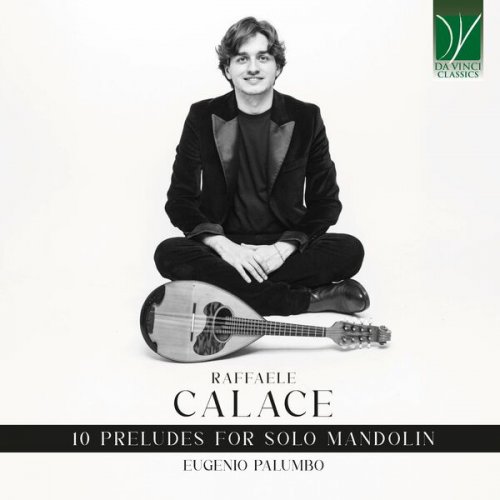
BAND/ARTIST: Eugenio Palumbo
- Title: Raffaele Calace: 10 Preludes for Solo Mandolin
- Year Of Release: 2026
- Label: Da Vinci Classics
- Genre: Classical
- Quality: flac lossless (tracks)
- Total Time: 00:53:27
- Total Size: 236 mb
- WebSite: Album Preview
Tracklist
01. Prelude No. I in G Major, Op. 45
02. Prelude No. II in D Minor, Op. 49
03. Prelude No. III in B Minor, Op. 63
04. Prelude No. V in D Major, Op. 74
05. Prelude No. X in G Minor, Op. 112
06. Prelude No. XI in G Major, Op. 136
07. Prelude No. XII in B-Flat Major, Op. 137
08. Prelude No. XIV in C Major, Op. 149
09. Prelude No. XV in G Minor, Op. 151
10. Grand Prelude in D Minor, Op. 175
Thanks to his work as a luthier, performer, publisher, and composer, Raffaele Calace is undoubtedly the most influential figure in the history of the mandolin. Born in Naples in 1863 into a family of luthiers, he learned from an early age both the art of instrument making and playing. After numerous trips abroad, in 1905 he returned to Naples and took full control of the family business.
Until that time, the mandolin was not recognized as a concert instrument due to the often poor quality of the instruments and the technical inadequacy of many teachers and performers. Calace addressed these issues by designing the Mandolino Classico da Concerto, with a larger body and a fingerboard extending to the 29th fret, and by offering free lessons to buyers. This was also supported by the publication of the Metodo per mandolino (Opp. 37–42), six volumes that systematically analyze all the technical and expressive possibilities of the instrument.
Bound to a repertoire mostly based on violin transcriptions, Calace felt the need to expand the repertoire for plucked instruments. He graduated in composition under Paolo Serrao and Francesco Ancona at the Conservatory of San Pietro a Majella in Naples and composed over 180 works, primarily for plucked instruments. In 1905, he founded the fortnightly magazine Musica moderna, aimed at encouraging composition for mandolin.
Among his numerous international tours, the 1924 trip to Japan stands out, where he conducted his own compositions with the Orchestra of the Master of the Imperial Court in the presence of Emperor Hirohito, receiving the Order of the Sacred Treasure. Performing concerts also with his daughter Maria, herself a virtuoso, he recorded discs in Germany, Italy, and Japan. He died in Naples in 1934.
The 10 Preludes for solo mandolin hold a central place in Calace’s work and represent the culmination of a long artistic maturation process. Composed between the late 19th century and the 1930s, they accompany almost his entire compositional career. They are not a cycle conceived at a single moment, but a project developed over time, with an increasingly innovative mandolin language.
Classified between Op. 45 and Op. 175, the mandolin preludes do not follow a continuous numbering. Some numbers in the series are taken by preludes for liuto cantabile, included in the same cycle by Calace. In total, the production includes 18 pieces, 10 for solo mandolin and 8 for liuto cantabile. For this publication, the original numbering of the mandolin preludes has been maintained.
It is noteworthy that Calace did not immediately dedicate himself to writing for solo mandolin. The I Prelude in G major, Op. 45, represents the first piece conceived exclusively for the instrument without accompaniment. This choice reveals the composer’s intention to turn to the solo mandolin only after developing a new idiomatic writing, capable of sustaining a complex and articulated musical discourse on its own.
The chronology of the preludes shows that they accompany different phases of the composer’s life. Some were written in Naples, others during international tours. A significant example is Preludes XI, Op. 136, and XII, Op. 137, composed aboard the ship Fiume-F during the crossing of the Gulf of Siam. Each prelude reflects, in its own way, the atmosphere, moods, and impressions of the places and moments of Calace’s life.
Stylistically, the preludes serve as a laboratory of advanced mandolin writing. The legacy of Paganini is fundamental: the 24 Caprices for Violin, Op. 1, were an evident model for the conception of the prelude as an autonomous piece, capable of combining virtuosity and expressiveness. Calace assimilates this model and reworks it with an innovative idiomatic writing for mandolin, translating violinistic styles into plectrum technique and developing a polyphonic conception of the instrument. Calace exploits all the possibilities of the concert mandolin he designed, with an extension up to the 29th fret, extreme leaps, high passages, and continuous use of timbral contrast between low and high registers.
The tremolo, a distinctive element of mandolin technique, has both structural and expressive functions: it creates melodic continuity, harmonic tension, and timbral density. Often required on multiple strings, it amplifies the perception of polyphony, bringing the mandolin closer to an orchestral conception. The accompanied singing, a tremolo melody over chords or plucked notes, together with arpeggios and broken chords, enriches the polyphony. This requires the performer to maintain precise control of sound balance.
The dedications offer further insights. Some are to celebrated mandolinists, such as Laurent Fantauzzi (I, Op. 45), Demetrius C. Dounis (II, Op. 49), Frederick L. Berthoud (III, Op. 63), and Franz De Groodt (X, Op. 110); others are more personal, like those to Mlle Fanny Hezak (XII, Op. 137) or Enrico Robino (XIV, Op. 149).
Expressively, the 10 Preludes can be read as an evolutionary journey. The earlier pieces have an energetic and brilliant language, sometimes almost demonstrative. Gradually, the writing becomes introspective and concentrated, reflecting the transition from youth to maturity, with technique fully internalized in the service of expression.
This recording was realized through field research in the Calace family archives, with a project of digitization and online sharing. It represents the first complete recording of the preludes performed by an Italian musician of the Italian school, as well as by the youngest interpreter to accomplish this feat.
01. Prelude No. I in G Major, Op. 45
02. Prelude No. II in D Minor, Op. 49
03. Prelude No. III in B Minor, Op. 63
04. Prelude No. V in D Major, Op. 74
05. Prelude No. X in G Minor, Op. 112
06. Prelude No. XI in G Major, Op. 136
07. Prelude No. XII in B-Flat Major, Op. 137
08. Prelude No. XIV in C Major, Op. 149
09. Prelude No. XV in G Minor, Op. 151
10. Grand Prelude in D Minor, Op. 175
Thanks to his work as a luthier, performer, publisher, and composer, Raffaele Calace is undoubtedly the most influential figure in the history of the mandolin. Born in Naples in 1863 into a family of luthiers, he learned from an early age both the art of instrument making and playing. After numerous trips abroad, in 1905 he returned to Naples and took full control of the family business.
Until that time, the mandolin was not recognized as a concert instrument due to the often poor quality of the instruments and the technical inadequacy of many teachers and performers. Calace addressed these issues by designing the Mandolino Classico da Concerto, with a larger body and a fingerboard extending to the 29th fret, and by offering free lessons to buyers. This was also supported by the publication of the Metodo per mandolino (Opp. 37–42), six volumes that systematically analyze all the technical and expressive possibilities of the instrument.
Bound to a repertoire mostly based on violin transcriptions, Calace felt the need to expand the repertoire for plucked instruments. He graduated in composition under Paolo Serrao and Francesco Ancona at the Conservatory of San Pietro a Majella in Naples and composed over 180 works, primarily for plucked instruments. In 1905, he founded the fortnightly magazine Musica moderna, aimed at encouraging composition for mandolin.
Among his numerous international tours, the 1924 trip to Japan stands out, where he conducted his own compositions with the Orchestra of the Master of the Imperial Court in the presence of Emperor Hirohito, receiving the Order of the Sacred Treasure. Performing concerts also with his daughter Maria, herself a virtuoso, he recorded discs in Germany, Italy, and Japan. He died in Naples in 1934.
The 10 Preludes for solo mandolin hold a central place in Calace’s work and represent the culmination of a long artistic maturation process. Composed between the late 19th century and the 1930s, they accompany almost his entire compositional career. They are not a cycle conceived at a single moment, but a project developed over time, with an increasingly innovative mandolin language.
Classified between Op. 45 and Op. 175, the mandolin preludes do not follow a continuous numbering. Some numbers in the series are taken by preludes for liuto cantabile, included in the same cycle by Calace. In total, the production includes 18 pieces, 10 for solo mandolin and 8 for liuto cantabile. For this publication, the original numbering of the mandolin preludes has been maintained.
It is noteworthy that Calace did not immediately dedicate himself to writing for solo mandolin. The I Prelude in G major, Op. 45, represents the first piece conceived exclusively for the instrument without accompaniment. This choice reveals the composer’s intention to turn to the solo mandolin only after developing a new idiomatic writing, capable of sustaining a complex and articulated musical discourse on its own.
The chronology of the preludes shows that they accompany different phases of the composer’s life. Some were written in Naples, others during international tours. A significant example is Preludes XI, Op. 136, and XII, Op. 137, composed aboard the ship Fiume-F during the crossing of the Gulf of Siam. Each prelude reflects, in its own way, the atmosphere, moods, and impressions of the places and moments of Calace’s life.
Stylistically, the preludes serve as a laboratory of advanced mandolin writing. The legacy of Paganini is fundamental: the 24 Caprices for Violin, Op. 1, were an evident model for the conception of the prelude as an autonomous piece, capable of combining virtuosity and expressiveness. Calace assimilates this model and reworks it with an innovative idiomatic writing for mandolin, translating violinistic styles into plectrum technique and developing a polyphonic conception of the instrument. Calace exploits all the possibilities of the concert mandolin he designed, with an extension up to the 29th fret, extreme leaps, high passages, and continuous use of timbral contrast between low and high registers.
The tremolo, a distinctive element of mandolin technique, has both structural and expressive functions: it creates melodic continuity, harmonic tension, and timbral density. Often required on multiple strings, it amplifies the perception of polyphony, bringing the mandolin closer to an orchestral conception. The accompanied singing, a tremolo melody over chords or plucked notes, together with arpeggios and broken chords, enriches the polyphony. This requires the performer to maintain precise control of sound balance.
The dedications offer further insights. Some are to celebrated mandolinists, such as Laurent Fantauzzi (I, Op. 45), Demetrius C. Dounis (II, Op. 49), Frederick L. Berthoud (III, Op. 63), and Franz De Groodt (X, Op. 110); others are more personal, like those to Mlle Fanny Hezak (XII, Op. 137) or Enrico Robino (XIV, Op. 149).
Expressively, the 10 Preludes can be read as an evolutionary journey. The earlier pieces have an energetic and brilliant language, sometimes almost demonstrative. Gradually, the writing becomes introspective and concentrated, reflecting the transition from youth to maturity, with technique fully internalized in the service of expression.
This recording was realized through field research in the Calace family archives, with a project of digitization and online sharing. It represents the first complete recording of the preludes performed by an Italian musician of the Italian school, as well as by the youngest interpreter to accomplish this feat.
| Classical | FLAC / APE
As a ISRA.CLOUD's PREMIUM member you will have the following benefits:
- Unlimited high speed downloads
- Download directly without waiting time
- Unlimited parallel downloads
- Support for download accelerators
- No advertising
- Resume broken downloads