


Chiaroscuro Quartet - Beethoven: String Quartets, Op. 59 No. 3, Op. 95 & Op. 133 (2026) [Hi-Res]
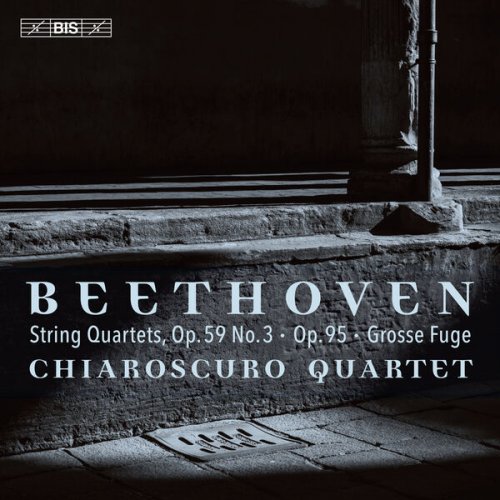
BAND/ARTIST: Chiaroscuro Quartet
- Title: Beethoven: String Quartets, Op. 59 No. 3, Op. 95 & Op. 133
- Year Of Release: 2026
- Label: BIS
- Genre: Classical
- Quality: flac lossless (tracks) / flac 24bits - 192.0kHz
- Total Time: 01:06:32
- Total Size: 319 mb / 2.41 gb
- WebSite: Album Preview
Tracklist
01. String Quartet No. 9 in C Major, Op. 59 No. 3 Razumovsky: I. Introduzione. Andante con moto – Allegro vivace
02. String Quartet No. 9 in C Major, Op. 59 No. 3 Razumovsky: II. Andante con moto quasi Allegretto
03. String Quartet No. 9 in C Major, Op. 59 No. 3 Razumovsky: III. Menuetto. Grazioso - Trio
04. String Quartet No. 9 in C Major, Op. 59 No. 3 Razumovsky: IV. Allegro molto
05. String Quartet No. 11 in F Minor, Op. 95 Serioso: I. Allegro con brio
06. String Quartet No. 11 in F Minor, Op. 95 Serioso: II. Allegretto ma non troppo
07. String Quartet No. 11 in F Minor, Op. 95 Serioso: III. Allegro assai vivace, ma serioso
08. String Quartet No. 11 in F Minor, Op. 95 Serioso: IV. Larghetto espressivo – Allegretto agitato – Allegro
The Chiaroscuro Quartet continues its thrilling journey through Beethoven’s string quartets with three works that chart the composer’s development in the genre. The ‘Razumovsky’ Quartets (1806), commissioned by Count Razumovsky for his house quartet led by Schuppanzigh, expanded the genre’s scale beyond Op. 18, baffling early listeners with their symphonic ambition. The first two were released last March (BIS-2688). The third and final quartet of the set, Op. 59 No. 3 in C major, which opens this recording, is the most accessible, with a Mozart-indebted introduction, a Slavonic-sounding Andante, and a flamboyant fugal finale.
The F minor Quartet, Op. 95 (‘Quartetto serioso’, 1810), written amid personal turmoil, is starker and more radical – compressed, harmonically abrupt, and structurally fragmented, ending unexpectedly in a light F major coda. Finally, the Grosse Fuge (1826), originally the finale of Op. 130, represents Beethoven’s most uncompromising achievement: a vast, dissonant fusion of fugue and variation that baffled contemporaries but was later hailed by Stravinsky as timeless and revolutionary. Together these works chart Beethoven’s progression from conversational classicism to visionary modernism.
| Classical | FLAC / APE | HD & Vinyl
As a ISRA.CLOUD's PREMIUM member you will have the following benefits:
- Unlimited high speed downloads
- Download directly without waiting time
- Unlimited parallel downloads
- Support for download accelerators
- No advertising
- Resume broken downloads