


Charles Dodge - Synthesized Voices (2026)
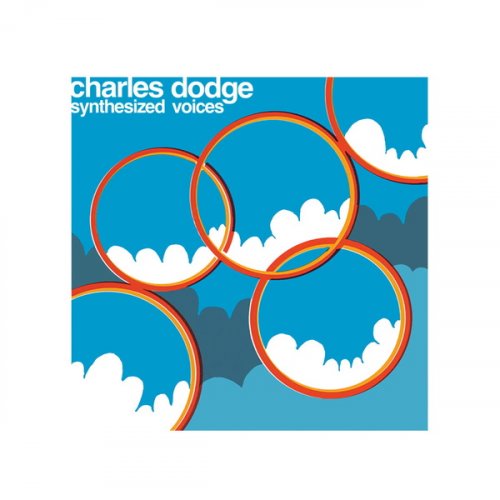
BAND/ARTIST: Charles Dodge
- Title: Synthesized Voices
- Year Of Release: 2026
- Label: Death Is Not The End
- Genre: Electronic
- Quality: 16bit-44,1kHz FLAC
- Total Time: 34:19
- Total Size: 108 mb
- WebSite: Album Preview
Tracklist
1. In Celebration 08:31
2. Speech Songs I: When I Am with You 01:38
3. Speech Songs II: He Destroyed Her Image 02:02
4. Speech Songs III: A Man Sitting in the Cafeteria 01:29
5. Speech Songs IV: The Days are Ahead 02:02
6. The Story of Our Lives I: We Are Reading the Story of Our Lives 05:18
7. The Story of Our Lives II: We are Reading the Story of Our Lives 02:49
8. The Story of Our Lives III: This Morning I Woke and Believed 01:57
9. The Story of Our Lives IV: Before You Woke 01:40
10. The Story of Our Lives V: If Only There Were A Perfect Moment in the Book 03:16
11. The Story of Our Lives VI: The Day Goes On 01:06
12. The Story of Our Lives VII: The Book Will Not Survive 02:26
Required listening for computer music freaks, 'Synthesized Voices' originally appeared in 1976, collecting innovative composer Charles Dodge's prophetic vocal experiments - recordings of Mark Strand's surrealist poems recreated on Bell Laboratories' uncanny synthetic speech tech. If you're into Anton Bruhin's deranged 'Speech Poems', this'll hit the spot.
You've got to applaud DINTE for the timing of this one. Right now, it's hard to tell what's a real voice and what's been cobbled together using LLM tech, Frankensteined from decades of scraped voiceovers and newsreels. Synthesized voices are stapled to short form content and used to provide an air of humanity to mass-generated robo-slop. And listening to Dodge's set of pioneering studies, it's remarkable how the technology has evolved in such a short period of time. In the early '70s, when Dodge began his investigations, heavily synthesised voices were terrifyingly mechanical, usually used to depict malign forces - just cop any of those vintage Doctor Who episodes that feature Cybermen. What's fascinating is that Dodge seems to understand its crucial limitation; he doesn't attempt to make the voice sound more human (and therefore more tolerable), but mirrors Strand's absurdist logic instead, going beyond the limit of the larynx.
Dodge explains that he labels it computer music because it's the Bell Labs computer setup that analysed and synthesised the voices, but he's quick to say that it's not generative music. Each poem was recorded to tape first then fed into the mainframe, that was then able to recreate the language using a pre-loaded archive of words and phrases. This would have resulted in a dry study, so Dodge tested the limits of the system by reconfiguring the parameters beforehand, shifting the pitch contour, the formants and duration of the syllables to radically diverge from the way we actually speak. The eight-minute 'In Celebration' is a great starting point. Composed in 1975, it seemingly shreds Strand's poem of the same name, in actuality locating its spirit, hanging on the word "you" just like Strand does. Dodge works with speed and pitch radically, twisting the phrases into machine-gunned barrages or disorienting decelerated harmonies. The words are still there - "your lungs prepare themselves for an ashen feeling" is a banger - but they've become hoarse, noisy growls or synthetic cries.
The four part 'Speech Songs' is lighter, rooted in poems that were intended to invite audiences to respond with laughter, yet there's something even more disturbing about a computerised voice noisily bellowing out the same word, stuttering and getting stuck on throwaway rhymes. Really, Dodge hits his stride with the ambitious 'The Story of Our Lives', an "operatic dialogue for male and female synthetic voices" that we'd love to think Robert Ashley heard. There's a similar commitment to breaking down the formula of theater and opera on display here as Dodge corrupts these mundane utterances, forcing out near-songs and high drama from soap opera-ready domestic situations. With Dodge at the controls, the words shift haphazardly from recognizable to horrifyingly alien for almost no reason whatsoever, adding a sense of danger to what might regularly be daytime telly. It's an astute skewering of American culture that's maybe more relevant now than it ever was.
| Electronic | FLAC / APE
As a ISRA.CLOUD's PREMIUM member you will have the following benefits:
- Unlimited high speed downloads
- Download directly without waiting time
- Unlimited parallel downloads
- Support for download accelerators
- No advertising
- Resume broken downloads