


Quince Ensemble, Ensemble Dal Niente & Ekmeles - Ciclo Lamarque, Pt. 1: Songs & Madrigals (2026) Hi-Res
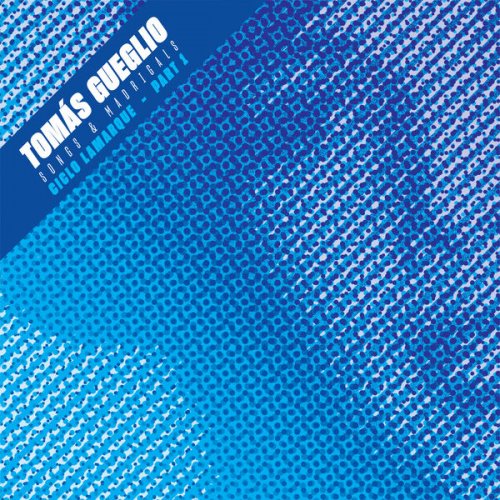
BAND/ARTIST: Quince Ensemble, Ensemble Dal Niente, Ekmeles
- Title: Ciclo Lamarque, Pt. 1: Songs & Madrigals
- Year Of Release: 2026
- Label: New Focus Recordings
- Genre: Classical
- Quality: FLAC 16/24 Bit (96 KHz / tracks+booklet)
- Total Time: 48:23 min
- Total Size: 213 / 884 MB
- WebSite: Album Preview
Tracklist:
01. Madrigales del Río: No. 1, Laughing
02. Madrigales del Río: No. 2, My Soul Wails
03. Madrigales del Río: No. 3, Cita en la frontera
04. Madrigales del Río: No. 4, Sentimental Hearing
05. Triste y madrigal: I. —
06. Triste y madrigal: II. —
07. Lamarque Songs: No. 1, — - No. 2, —
08. Lamarque Songs: No. 3, — - No. 4, —
09. Lamarque Songs: No. 5, —
10. Soap Madrigals: No. 1, Sentimen-(tal)
11. Soap Madrigals: No. 2, Misfortune
12. Soap Madrigals: No. 3, Sweet Torment, My Grieving Soul
13. Canciones que el río murmura: No. 1, —
14. Canciones que el río murmura: No. 2, —
15. Canciones que el río murmura: No. 3, —
01. Madrigales del Río: No. 1, Laughing
02. Madrigales del Río: No. 2, My Soul Wails
03. Madrigales del Río: No. 3, Cita en la frontera
04. Madrigales del Río: No. 4, Sentimental Hearing
05. Triste y madrigal: I. —
06. Triste y madrigal: II. —
07. Lamarque Songs: No. 1, — - No. 2, —
08. Lamarque Songs: No. 3, — - No. 4, —
09. Lamarque Songs: No. 5, —
10. Soap Madrigals: No. 1, Sentimen-(tal)
11. Soap Madrigals: No. 2, Misfortune
12. Soap Madrigals: No. 3, Sweet Torment, My Grieving Soul
13. Canciones que el río murmura: No. 1, —
14. Canciones que el río murmura: No. 2, —
15. Canciones que el río murmura: No. 3, —
Chicago based Argentinean composer Tomás Gueglio releases Ciclo Lamarque - Part 1: Songs & Madrigals, a follow up to his 2020 New Focus release Duermevela, which was a collection of instrumental chamber works. Gueglio, a 2025 Guggenheim Fellow, focuses on poignant, evocative textures, putting various compositional instruments such as counterpoint, polyrhythm, microtonality, and extended technique at the service of his immersive textures.
The central source of inspiration for the music on this new collection of Tomás Gueglio’s music for voices, with and without ensemble, is a 1940’s Argentine melodrama starring Libertad Lamarque, titled Cita en la frontera. The movie was released during an era in which Hollywood aesthetics were encroaching upon the Latin American film genre. The aesthetic dissonances and overdramatic tropes that resulted from this kind of cultural imperialism fascinated Gueglio. His connection to the film is personal as well; his maternal grandmother appeared as an extra in the movie, nursing her own ambitions as an actress, and even later adopting a pseudonym, Libertad Del Río, that was clearly catalyzed by her admiration for Lamarque. Alas, her theatrical dreams were quashed by life circumstances, but the familial episode receives new life in these musical meditations. Through Cita en la frontera, and his grandmother’s role in it, Gueglio is able to navigate us into an expressive time machine, using a faded era as a kind of wormhole through which he can freely explore the depths of emotion from a deliberative, but not detached, distance.
All of the works feature texts drawn from tangos that are included in the movie, subjecting them to a collage style reordering. The result is a collection of abstract meditations on love and loss, lifted above the thick, earthy pathos of the traditional tango tradition to inhabit a thinner sonic altitude. Each work has its own identity, shaped by its instrumentation, dedicatee, and structural integrity, but they all rotate around a shared emotional orientation, a kind of weightless nostalgia.
Madrigales Del Río, written for and performed by female vocal quartet Quince Ensemble, opens the album with four hypnotic settings that establish prismatic, interconnected textures and fuse the four voices into a symbiotic mechanism. Balancing between weighty rich harmonies, percolating timbral ornamentation, and touches of tragicomic lightness, Gueglio establishes structures that seem to spiral around an expressive center, simultaneously progressing while circling around its essence. Evanescent sighs, weightless glissandi, and gentle sibilants animate the texture as it excavates the inner world of longing.
Triste y madrigal, for Ensemble Dal Niente, is scored for soprano (Amanda DeBoer Bartlett, also in Quince), flute, French horn, harp, electric guitar, and violin. DeBoer Bartlett adopts a silvery, quasi-straight tone approach over a murky, ambiguous accompaniment of nocturnal utterances and interjections in the ensemble. This sonic haze gradually becomes more animated and engaged with the foreground melodic material before the texture is suddenly interrupted by overlaid voice and orchestral excerpts from Cita en la frontera. The cool quality of the main vocal and ensemble material juxtaposed with the poignant flashback suggests a fraught relationship to memory, grasping for a lost time.
Lamarque Songs, also for Dal Niente but now featuring soprano Carrie Henneman Shaw, deconstructs the mannerisms of the 1940s films through fragmented shards of sound. Expressive ingredients of Libertad Lamarque’s melodramatic performing style are heard as if through an all-revealing microphone, zeroing in on their subtlety with Webernian focus. The transparent texture of the piece owes something to its instrumentation; dissected soprano gestures are mirrored and punctuated in rarefied hyper-expressive hybrid gestures with the guitar, viola, flute, and percussion. As with many of his works, Gueglio weaves ornamental embellishment within a skeletal through-line, a kind of cantus firmus that guides the listener with steady direction. This linearity takes on a particularly stark and overt character at the end of the fourth movement (track 8 comprises both the third and fourth movements), with a series of a dramatic, chromatically ascending unison pillars that usher in the otherworldly, extended sonic vocabulary of the final movement.
If Lamarque Songs is a tapestry of sonic impressions, Soap Madrigals, for the New York based Ekmeles vocal ensemble, formalizes this fragmentary approach. The work is organized into 41 short fragments, subsequently grouped into three larger movements. While the source texts are once again drawn from Cita en la frontera, Gueglio also points towards the succinct tradition of 17th century Italian madrigals, injecting extended techniques and microtonal inflections into his carefully crafted contrapuntal creations. Gueglio uses the vocal ensemble to establish multiple layers of musical activity, passing notes of a melody between the singers while a secondary layer embellishes it. Whistling, non-pitched vocal effects, glissandi, punctuating consonants, and spoken interjections dot the translucent soundscape, lending the piece a surreal bearing. In the final phrase of the work, Gueglio takes advantage of Ekmeles’ prodigious skill singing subtle microtonal harmonic progressions, before ending the work with a brief, sinking tutti glissando.
The final work on the recording, Canciones que el río murmura, once again features Chicago based Ensemble Dal Niente and soprano Carrie Henneman Shaw. Returning to his grandmother’s aspirational flirtation with a life in film, Gueglio positions a conceptual river at the center of the composition (a nod to his grandmother’s short lived stage name, Libertad del Río). The soprano line and electronics part alternate in their personification of “riverness,” guiding the composition forward with a flowing line. The instruments dart around, hover above, and envelop this haunting thread, accentuating its pivotal arrivals and coloring its undulations.
Once again, Gueglio builds a multi-dimensional texture that invites layers of listening, to its foreground teleology, to its background filigree, and to the relationship between the two. Here, as with the other works on this recording, Tomás Gueglio conjures an interdependent sonic world, beguiling and intoxicating, an expressive cocoon within which one can contemplate and reflect deeply upon life’s vicissitudes, not to reach imperative conclusions but to revel in their mystery.
– Dan Lippel
The central source of inspiration for the music on this new collection of Tomás Gueglio’s music for voices, with and without ensemble, is a 1940’s Argentine melodrama starring Libertad Lamarque, titled Cita en la frontera. The movie was released during an era in which Hollywood aesthetics were encroaching upon the Latin American film genre. The aesthetic dissonances and overdramatic tropes that resulted from this kind of cultural imperialism fascinated Gueglio. His connection to the film is personal as well; his maternal grandmother appeared as an extra in the movie, nursing her own ambitions as an actress, and even later adopting a pseudonym, Libertad Del Río, that was clearly catalyzed by her admiration for Lamarque. Alas, her theatrical dreams were quashed by life circumstances, but the familial episode receives new life in these musical meditations. Through Cita en la frontera, and his grandmother’s role in it, Gueglio is able to navigate us into an expressive time machine, using a faded era as a kind of wormhole through which he can freely explore the depths of emotion from a deliberative, but not detached, distance.
All of the works feature texts drawn from tangos that are included in the movie, subjecting them to a collage style reordering. The result is a collection of abstract meditations on love and loss, lifted above the thick, earthy pathos of the traditional tango tradition to inhabit a thinner sonic altitude. Each work has its own identity, shaped by its instrumentation, dedicatee, and structural integrity, but they all rotate around a shared emotional orientation, a kind of weightless nostalgia.
Madrigales Del Río, written for and performed by female vocal quartet Quince Ensemble, opens the album with four hypnotic settings that establish prismatic, interconnected textures and fuse the four voices into a symbiotic mechanism. Balancing between weighty rich harmonies, percolating timbral ornamentation, and touches of tragicomic lightness, Gueglio establishes structures that seem to spiral around an expressive center, simultaneously progressing while circling around its essence. Evanescent sighs, weightless glissandi, and gentle sibilants animate the texture as it excavates the inner world of longing.
Triste y madrigal, for Ensemble Dal Niente, is scored for soprano (Amanda DeBoer Bartlett, also in Quince), flute, French horn, harp, electric guitar, and violin. DeBoer Bartlett adopts a silvery, quasi-straight tone approach over a murky, ambiguous accompaniment of nocturnal utterances and interjections in the ensemble. This sonic haze gradually becomes more animated and engaged with the foreground melodic material before the texture is suddenly interrupted by overlaid voice and orchestral excerpts from Cita en la frontera. The cool quality of the main vocal and ensemble material juxtaposed with the poignant flashback suggests a fraught relationship to memory, grasping for a lost time.
Lamarque Songs, also for Dal Niente but now featuring soprano Carrie Henneman Shaw, deconstructs the mannerisms of the 1940s films through fragmented shards of sound. Expressive ingredients of Libertad Lamarque’s melodramatic performing style are heard as if through an all-revealing microphone, zeroing in on their subtlety with Webernian focus. The transparent texture of the piece owes something to its instrumentation; dissected soprano gestures are mirrored and punctuated in rarefied hyper-expressive hybrid gestures with the guitar, viola, flute, and percussion. As with many of his works, Gueglio weaves ornamental embellishment within a skeletal through-line, a kind of cantus firmus that guides the listener with steady direction. This linearity takes on a particularly stark and overt character at the end of the fourth movement (track 8 comprises both the third and fourth movements), with a series of a dramatic, chromatically ascending unison pillars that usher in the otherworldly, extended sonic vocabulary of the final movement.
If Lamarque Songs is a tapestry of sonic impressions, Soap Madrigals, for the New York based Ekmeles vocal ensemble, formalizes this fragmentary approach. The work is organized into 41 short fragments, subsequently grouped into three larger movements. While the source texts are once again drawn from Cita en la frontera, Gueglio also points towards the succinct tradition of 17th century Italian madrigals, injecting extended techniques and microtonal inflections into his carefully crafted contrapuntal creations. Gueglio uses the vocal ensemble to establish multiple layers of musical activity, passing notes of a melody between the singers while a secondary layer embellishes it. Whistling, non-pitched vocal effects, glissandi, punctuating consonants, and spoken interjections dot the translucent soundscape, lending the piece a surreal bearing. In the final phrase of the work, Gueglio takes advantage of Ekmeles’ prodigious skill singing subtle microtonal harmonic progressions, before ending the work with a brief, sinking tutti glissando.
The final work on the recording, Canciones que el río murmura, once again features Chicago based Ensemble Dal Niente and soprano Carrie Henneman Shaw. Returning to his grandmother’s aspirational flirtation with a life in film, Gueglio positions a conceptual river at the center of the composition (a nod to his grandmother’s short lived stage name, Libertad del Río). The soprano line and electronics part alternate in their personification of “riverness,” guiding the composition forward with a flowing line. The instruments dart around, hover above, and envelop this haunting thread, accentuating its pivotal arrivals and coloring its undulations.
Once again, Gueglio builds a multi-dimensional texture that invites layers of listening, to its foreground teleology, to its background filigree, and to the relationship between the two. Here, as with the other works on this recording, Tomás Gueglio conjures an interdependent sonic world, beguiling and intoxicating, an expressive cocoon within which one can contemplate and reflect deeply upon life’s vicissitudes, not to reach imperative conclusions but to revel in their mystery.
– Dan Lippel
| Classical | FLAC / APE | HD & Vinyl
As a ISRA.CLOUD's PREMIUM member you will have the following benefits:
- Unlimited high speed downloads
- Download directly without waiting time
- Unlimited parallel downloads
- Support for download accelerators
- No advertising
- Resume broken downloads