


Kai Whiston - The Elder (2026)
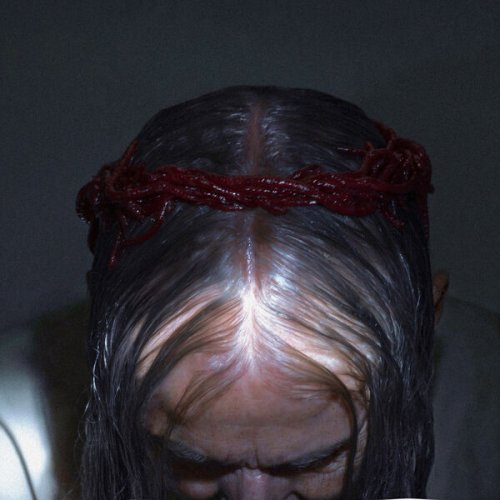
BAND/ARTIST: Kai Whiston
- Title: The Elder
- Year Of Release: 2026
- Label: Self
- Genre: Electronic, Experimental, Industrial, Noise
- Quality: 16bit-44,1kHz FLAC / 24bit-48kHz FLAC
- Total Time: 44:52
- Total Size: 302 mb / 564 mb
- WebSite: Album Preview
TRACKLIST:
1. A swing bound by crimson ropes
2. Tzschlip
3. Retch’d
4. The nunnery
5. A new crimson haze
6. Spill for the bleed
7. Men (with Günseli Yalcinkaya)
8. Crunesick
9. Lengthen the reach
10. Dis ease
11. Horns
12. Bursztyn out
13. What more
In a studio sixty hours outside of Żeliszów, Kai Whiston is building an ecclesia of sound and stage direction, piece by consecrated piece. The studio has the improvised holiness of a field chapel. Brass horns stand sentry along the walls. A row of senile machines purrs on the bench, each one a reliquary of dead operating systems, each guarding its own stubborn liturgy of tools. A crimson wash catches every flaw in the panelled walls and turns it into theatre.
It wasn't Poland that brought him here, but Polesia—an ancient Slavic marshland running through what's now Poland, Belarus and Ukraine, the basin where the Slavs are thought to have begun, and where that beginning still lingers in the soil. Pagan rites, border wars, resettlements, partitions, renaissances, erasures—centuries of belief switching masks without changing its appetite. Over the past three or four years, Whiston's own interior weather has matched that landscape—stark winters of decision, hard-won springs of clarity. He writes into that pressure. The play's court could be any century; the psychology is strictly of now.
Three works, one house, told in order of proximity to the grave—and running through all three, the heir, Andrei Zagonov, who mocks the family curse until he becomes it. First, 'Krepost, Polesia', a video game set below stairs at the estate, where the player is taken on as staff and Andrei's mother breaks protocol to warn that she will be murdered in five days. Second, 'A New Crimson Haze'—the play of her funeral, grief taking Andrei apart while the succession is settled behind the coffin. Third and finally, 'The Elder': the record of what he becomes, the last document out of the house, left to whoever comes after to decide what it means.
The record growing inside this studio lands somewhere between post-industrial pressure and esoteric chamber malady. It is heavy. The artist hesitates to pigeonhole it: "I don't know. I can't stand genre tags. Our cornet remarked it as Skrillex meets Schoenberg." Even the quiet pieces arrive with mass. "It is a raw nerve expression," Whiston admits, "but also a specific set of musical limitations that nearly fucking killed me." Seven years of production sit inside it, and the strata show—in places the demos cut seven years ago still stand, load-bearing walls from an earlier house. The methods are as violent as the story they serve: contact microphones pressed to the brass to catch the thumps and breath inside it, ultrasonic recordings dragged down into hearing range, modular and no-input synthesis, software built by hand when nothing bought would do. Valves wheeze, electronics feed back into monolithic ruptures of bass, and breath hardens into architecture. The piano loses its polish: felted hammers and sheet metal detune its notes until 'D sharp' feels like a rumour. Where the avant-garde gives you abrasion as revelation, Whiston gives you ceremony as weapon. "Obviously, a sort of traditionally beautiful sound wasn't the goal. I was looking for something elegant to break under extreme stress. Admittedly, these ideas were first born from fear, even hate, but have since mutated into something more vital."
The accompanying play, 'A New Crimson Haze', has a straightforward premise and a crooked conscience. The matriarch, Lady Anastasia, is dead. The Krepost—the family's hermetic estate—mourns, or performs mourning. The Elder—older than history, fluent in certainty—treats reverence as a black hole. The house's true inheritance is addiction—to time, to worship, to more—and everyone in it is using. Andrei learns that love in this house is indistinguishable from usefulness. Around them, The Herd tune for a premiere that is also a transfer of power.
The play's epigraph comes from parasitology: the jewel wasp, whose sting removes a cockroach's will to flee, so that the host walks itself into the burrow. The Krepost's doors are never locked; nobody runs. The thesis line—"what gods do we create when we destroy our own?"—is a working method. Each act erects a belief and then loads it until it cracks, the same way Whiston overdrives a patch until the artefacts sing. He writes in oppositions: fidelity vs interpretation; decree vs judgement; spectacle vs truth. Musical scenes are scored to sound like minutes being approved—metronomic, correct, suspiciously bloodless—until a bar slips, a brass chorale blooms, and the human hand breaks the seal. Systems fail; people make do; power pretends it planned the fracture.
The theatre and the record are the same experiment now. If the past was a series of left turns, this one isn't a swerve so much as a merge. The lane he's chosen is narrow, unforgiving, and very fast. The record is not a soundtrack in the tidy sense. Themes recur with altered uniforms. Brass is the spine, not for its bombast but for its air; you hear breath, you hear fatigue. The horns work four jobs here: instrument, beast, body, building. The old machines do the rest, wearing every polished surface down to a texture with pores.
All power ends in paperwork. The house does not end; you just stop listening. The silence afterwards belongs to whoever is still in the room.
1. A swing bound by crimson ropes
2. Tzschlip
3. Retch’d
4. The nunnery
5. A new crimson haze
6. Spill for the bleed
7. Men (with Günseli Yalcinkaya)
8. Crunesick
9. Lengthen the reach
10. Dis ease
11. Horns
12. Bursztyn out
13. What more
In a studio sixty hours outside of Żeliszów, Kai Whiston is building an ecclesia of sound and stage direction, piece by consecrated piece. The studio has the improvised holiness of a field chapel. Brass horns stand sentry along the walls. A row of senile machines purrs on the bench, each one a reliquary of dead operating systems, each guarding its own stubborn liturgy of tools. A crimson wash catches every flaw in the panelled walls and turns it into theatre.
It wasn't Poland that brought him here, but Polesia—an ancient Slavic marshland running through what's now Poland, Belarus and Ukraine, the basin where the Slavs are thought to have begun, and where that beginning still lingers in the soil. Pagan rites, border wars, resettlements, partitions, renaissances, erasures—centuries of belief switching masks without changing its appetite. Over the past three or four years, Whiston's own interior weather has matched that landscape—stark winters of decision, hard-won springs of clarity. He writes into that pressure. The play's court could be any century; the psychology is strictly of now.
Three works, one house, told in order of proximity to the grave—and running through all three, the heir, Andrei Zagonov, who mocks the family curse until he becomes it. First, 'Krepost, Polesia', a video game set below stairs at the estate, where the player is taken on as staff and Andrei's mother breaks protocol to warn that she will be murdered in five days. Second, 'A New Crimson Haze'—the play of her funeral, grief taking Andrei apart while the succession is settled behind the coffin. Third and finally, 'The Elder': the record of what he becomes, the last document out of the house, left to whoever comes after to decide what it means.
The record growing inside this studio lands somewhere between post-industrial pressure and esoteric chamber malady. It is heavy. The artist hesitates to pigeonhole it: "I don't know. I can't stand genre tags. Our cornet remarked it as Skrillex meets Schoenberg." Even the quiet pieces arrive with mass. "It is a raw nerve expression," Whiston admits, "but also a specific set of musical limitations that nearly fucking killed me." Seven years of production sit inside it, and the strata show—in places the demos cut seven years ago still stand, load-bearing walls from an earlier house. The methods are as violent as the story they serve: contact microphones pressed to the brass to catch the thumps and breath inside it, ultrasonic recordings dragged down into hearing range, modular and no-input synthesis, software built by hand when nothing bought would do. Valves wheeze, electronics feed back into monolithic ruptures of bass, and breath hardens into architecture. The piano loses its polish: felted hammers and sheet metal detune its notes until 'D sharp' feels like a rumour. Where the avant-garde gives you abrasion as revelation, Whiston gives you ceremony as weapon. "Obviously, a sort of traditionally beautiful sound wasn't the goal. I was looking for something elegant to break under extreme stress. Admittedly, these ideas were first born from fear, even hate, but have since mutated into something more vital."
The accompanying play, 'A New Crimson Haze', has a straightforward premise and a crooked conscience. The matriarch, Lady Anastasia, is dead. The Krepost—the family's hermetic estate—mourns, or performs mourning. The Elder—older than history, fluent in certainty—treats reverence as a black hole. The house's true inheritance is addiction—to time, to worship, to more—and everyone in it is using. Andrei learns that love in this house is indistinguishable from usefulness. Around them, The Herd tune for a premiere that is also a transfer of power.
The play's epigraph comes from parasitology: the jewel wasp, whose sting removes a cockroach's will to flee, so that the host walks itself into the burrow. The Krepost's doors are never locked; nobody runs. The thesis line—"what gods do we create when we destroy our own?"—is a working method. Each act erects a belief and then loads it until it cracks, the same way Whiston overdrives a patch until the artefacts sing. He writes in oppositions: fidelity vs interpretation; decree vs judgement; spectacle vs truth. Musical scenes are scored to sound like minutes being approved—metronomic, correct, suspiciously bloodless—until a bar slips, a brass chorale blooms, and the human hand breaks the seal. Systems fail; people make do; power pretends it planned the fracture.
The theatre and the record are the same experiment now. If the past was a series of left turns, this one isn't a swerve so much as a merge. The lane he's chosen is narrow, unforgiving, and very fast. The record is not a soundtrack in the tidy sense. Themes recur with altered uniforms. Brass is the spine, not for its bombast but for its air; you hear breath, you hear fatigue. The horns work four jobs here: instrument, beast, body, building. The old machines do the rest, wearing every polished surface down to a texture with pores.
All power ends in paperwork. The house does not end; you just stop listening. The silence afterwards belongs to whoever is still in the room.
| Electronic | FLAC / APE | HD & Vinyl
As a ISRA.CLOUD's PREMIUM member you will have the following benefits:
- Unlimited high speed downloads
- Download directly without waiting time
- Unlimited parallel downloads
- Support for download accelerators
- No advertising
- Resume broken downloads