


Floyd Cramer - Floyd Cramer Country (2026) Hi-Res
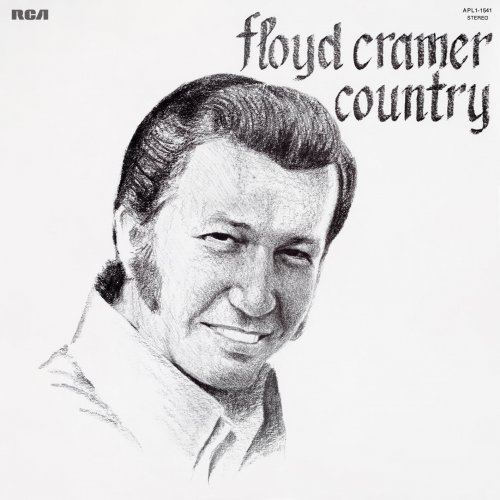
BAND/ARTIST: Floyd Cramer
- Title: Floyd Cramer Country
- Year Of Release: 1976 / 2026
- Label: RCA Victor
- Genre: Country, Easy Listenin
- Quality: 320 / FLAC (tracks) / FLAC (tracks) 24bit-192kHz
- Total Time: 31:53
- Total Size: 74 / 193 Mb / 1.20 Gb
- WebSite: Album Preview
Tracklist:
1. Cotton Fields (2:29)
2. I'm Thinking Tonight Of My Blue Eyes (2:56)
3. San Antonio Rose (2:34)
4. Today I Started Loving You Again (2:21)
5. Faded Love (2:37)
6. Shenandoah (2:26)
7. Wabash Cannon Ball (2:27)
8. The Prisoner's Song (2:37)
9. Kentucky (2:49)
10. For The Good Times (3:20)
11. Goodnight, Irene (3:12)
12. Tennessee Waltz (2:17)
1. Cotton Fields (2:29)
2. I'm Thinking Tonight Of My Blue Eyes (2:56)
3. San Antonio Rose (2:34)
4. Today I Started Loving You Again (2:21)
5. Faded Love (2:37)
6. Shenandoah (2:26)
7. Wabash Cannon Ball (2:27)
8. The Prisoner's Song (2:37)
9. Kentucky (2:49)
10. For The Good Times (3:20)
11. Goodnight, Irene (3:12)
12. Tennessee Waltz (2:17)
When the piano became an integral part of Nashville arrangements in the early 1960s, Floyd Cramer shouldered most of the load. He popularized the “slip-note” technique on dozens of hits by a wide range of artists but deserves to be just as famous for his unerring taste and his understanding of what not to play.
Cramer grew up in the small sawmill town of Huttig, Arkansas. He learned piano by ear, and after graduating high school in 1951, he moved to Shreveport and found a job on the Louisiana Hayride.
Cramer arrived just as Lefty Frizzell’s records were popularizing what Cramer termed “a plinking honky-tonk type piano.” He played in that style on Jim Reeves’s “Mexican Joe” and made his first record for Abbott Records in 1953.
Aside from Owen Bradley, Poppa John Gordy, and Marvin Hughes, there were few studio pianists in Nashville when Cramer first went there in 1952 with radio and TV announcer T. Tommy Cutrer. After a year or two of commuting, Cramer talked to Chet Atkins about becoming a session pianist and left Shreveport for Nashville in January 1955.
“By 1956 and ’57, I was in day and night doing sessions,” Cramer said. One of the few records on which he played something other than piano was Jimmy Dean’s “Big Bad John”: he created the pickaxe sound effects by hanging an iron doorstopper on a coat hanger and hitting it with a hammer.
Cramer grew up in the small sawmill town of Huttig, Arkansas. He learned piano by ear, and after graduating high school in 1951, he moved to Shreveport and found a job on the Louisiana Hayride.
Cramer arrived just as Lefty Frizzell’s records were popularizing what Cramer termed “a plinking honky-tonk type piano.” He played in that style on Jim Reeves’s “Mexican Joe” and made his first record for Abbott Records in 1953.
Aside from Owen Bradley, Poppa John Gordy, and Marvin Hughes, there were few studio pianists in Nashville when Cramer first went there in 1952 with radio and TV announcer T. Tommy Cutrer. After a year or two of commuting, Cramer talked to Chet Atkins about becoming a session pianist and left Shreveport for Nashville in January 1955.
“By 1956 and ’57, I was in day and night doing sessions,” Cramer said. One of the few records on which he played something other than piano was Jimmy Dean’s “Big Bad John”: he created the pickaxe sound effects by hanging an iron doorstopper on a coat hanger and hitting it with a hammer.
| Country | Easy Listening | FLAC / APE | Mp3 | HD & Vinyl
As a ISRA.CLOUD's PREMIUM member you will have the following benefits:
- Unlimited high speed downloads
- Download directly without waiting time
- Unlimited parallel downloads
- Support for download accelerators
- No advertising
- Resume broken downloads