


Leoš Čepický, Michal Kaňka - Brahms: Concerto for Violin and Cello, Op. 102 in A Minor - Mozart: Sinfonia Concertante for Violin and Viola in E-Flat Major, K. 364 / 320d (2026)
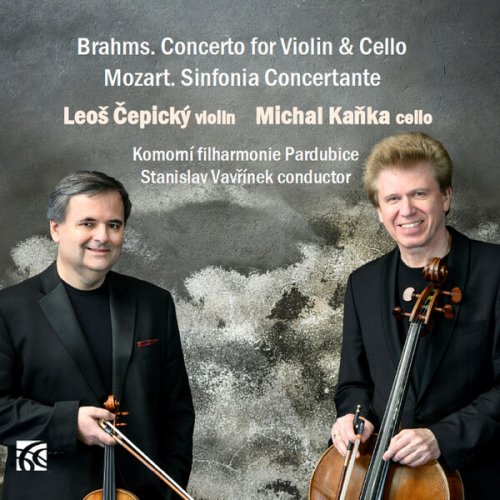
BAND/ARTIST: Leoš Čepický, Michal Kaňka
- Title: Brahms: Concerto for Violin and Cello, Op. 102 in A Minor - Mozart: Sinfonia Concertante for Violin and Viola in E-Flat Major, K. 364 / 320d
- Year Of Release: 2026
- Label: Nimbus Alliance
- Genre: Classical
- Quality: flac lossless (tracks)
- Total Time: 01:05:45
- Total Size: 316 mb
- WebSite: Album Preview
Tracklist
01. Concerto for Violin and Cello, Op. 102 in A Minor: I. Allegro
02. Concerto for Violin and Cello, Op. 102 in A Minor: II. Andante
03. Concerto for Violin and Cello, Op. 102 in A Minor: III. Vivace non troppo
04. Sinfonia Concertante for Violin and Viola in E-Flat Major, K. 364 / 320d (Arr. for violin and cello by Michal Kaňka): I. Allegro maestoso
05. Sinfonia Concertante for Violin and Viola in E-Flat Major, K. 364 / 320d (Arr. for violin and cello by Michal Kaňka): II. Andante
06. Sinfonia Concertante for Violin and Viola in E-Flat Major, K. 364 / 320d (Arr. for violin and cello by Michal Kaňka): III. Presto
Towards the end of his life, Johannes Brahms declared more than once that he was retiring from composing – luckily for us, he never quite followed through. Not because he had run out of inspiration –Brahms was at the height of his powers – but because he felt a growing pull toward the intimacy of chamber music, piano pieces, and songs, which brought him deeper personal satisfaction than grand orchestral forms. Still, Brahms returned once more to orchestral writing in 1887 with the Double Concerto in A minor, Op. 102 – his last orchestral work. The reason was personal: a gesture of reconciliation toward his estranged friend, the great violinist Joseph Joachim.
This concerto, written for Joachim and cellist Robert Hausmann, symbolises renewed harmony – not just musically, but emotionally. The two solo instruments engage in a rich, expressive dialogue throughout. Mozart wrote his Sinfonia Concertante in E-flat major for violin and viola in the summer of 1779 – a true synthesis of symphony and concerto. This work is expansive and noble in character, full of brilliant writing for both soloists. Mozart, himself an accomplished violinist, clearly understood how to write for the instrument with flair and sensitivity. One striking feature of the work is that the viola part is written in D major, requiring the instrument to be tuned a semitone higher (a practice known as scordatura). Common in the Baroque era, scordatura was still occasionally used in Mozart’s time to achieve a brighter, more penetrating sound. The autograph of the piece is lost; only later copies have survived –except for the original drafts of the cadenzas. On this recording, the viola part is performed by a cellist, playing in the original viola position without octave transposition.
01. Concerto for Violin and Cello, Op. 102 in A Minor: I. Allegro
02. Concerto for Violin and Cello, Op. 102 in A Minor: II. Andante
03. Concerto for Violin and Cello, Op. 102 in A Minor: III. Vivace non troppo
04. Sinfonia Concertante for Violin and Viola in E-Flat Major, K. 364 / 320d (Arr. for violin and cello by Michal Kaňka): I. Allegro maestoso
05. Sinfonia Concertante for Violin and Viola in E-Flat Major, K. 364 / 320d (Arr. for violin and cello by Michal Kaňka): II. Andante
06. Sinfonia Concertante for Violin and Viola in E-Flat Major, K. 364 / 320d (Arr. for violin and cello by Michal Kaňka): III. Presto
Towards the end of his life, Johannes Brahms declared more than once that he was retiring from composing – luckily for us, he never quite followed through. Not because he had run out of inspiration –Brahms was at the height of his powers – but because he felt a growing pull toward the intimacy of chamber music, piano pieces, and songs, which brought him deeper personal satisfaction than grand orchestral forms. Still, Brahms returned once more to orchestral writing in 1887 with the Double Concerto in A minor, Op. 102 – his last orchestral work. The reason was personal: a gesture of reconciliation toward his estranged friend, the great violinist Joseph Joachim.
This concerto, written for Joachim and cellist Robert Hausmann, symbolises renewed harmony – not just musically, but emotionally. The two solo instruments engage in a rich, expressive dialogue throughout. Mozart wrote his Sinfonia Concertante in E-flat major for violin and viola in the summer of 1779 – a true synthesis of symphony and concerto. This work is expansive and noble in character, full of brilliant writing for both soloists. Mozart, himself an accomplished violinist, clearly understood how to write for the instrument with flair and sensitivity. One striking feature of the work is that the viola part is written in D major, requiring the instrument to be tuned a semitone higher (a practice known as scordatura). Common in the Baroque era, scordatura was still occasionally used in Mozart’s time to achieve a brighter, more penetrating sound. The autograph of the piece is lost; only later copies have survived –except for the original drafts of the cadenzas. On this recording, the viola part is performed by a cellist, playing in the original viola position without octave transposition.
| Classical | FLAC / APE
As a ISRA.CLOUD's PREMIUM member you will have the following benefits:
- Unlimited high speed downloads
- Download directly without waiting time
- Unlimited parallel downloads
- Support for download accelerators
- No advertising
- Resume broken downloads