


Little Richard - Frutti Roots: To God and Back Again (2020)
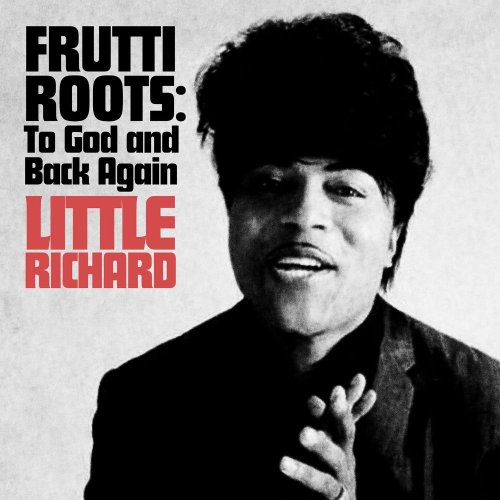
BAND/ARTIST: Little Richard
- Title: Frutti Roots: To God and Back Again
- Year Of Release: 2020
- Label: HHO
- Genre: Rock & Roll, R&B, Soul
- Quality: FLAC (tracks) / MP3
- Total Time: 59:49
- Total Size: 338 / 138 MB
- WebSite: Album Preview
Tracklist:
DISC 1
01 Taxi Blues
02 Get Rich Quick
03 Ain't Nothin' Happening
04 Fool at the Wheel
05 I Brought it All on Myself
06 Tutti Frutti
07 Long Tall Sally
08 Lucille
09 Rip it Up
10 Heeby Jeebies
11 Good Golly Miss Molly
DISC 2
01 Ride on King Jesus
02 (There Will Be) Peace in the Valley (For Me)
03 It Takes Everything to Serve The Lord
04 In Times Like These
05 A Whole Lotta Shakin' Goin' On
06 Groovy Little Suzy
07 Short Fat Fanny
08 Money Honey
09 Mississippi
10 In the Name
11 Chains of Love
12 Dock of the Bay
DISC 1
01 Taxi Blues
02 Get Rich Quick
03 Ain't Nothin' Happening
04 Fool at the Wheel
05 I Brought it All on Myself
06 Tutti Frutti
07 Long Tall Sally
08 Lucille
09 Rip it Up
10 Heeby Jeebies
11 Good Golly Miss Molly
DISC 2
01 Ride on King Jesus
02 (There Will Be) Peace in the Valley (For Me)
03 It Takes Everything to Serve The Lord
04 In Times Like These
05 A Whole Lotta Shakin' Goin' On
06 Groovy Little Suzy
07 Short Fat Fanny
08 Money Honey
09 Mississippi
10 In the Name
11 Chains of Love
12 Dock of the Bay
One of the original rock & roll greats, Little Richard merged the fire of gospel with New Orleans R&B, pounding the piano and wailing with gleeful abandon. While numerous other R&B greats of the early '50s had been moving in a similar direction, none of them matched the sheer electricity of Richard's vocals. With his bullet-speed deliveries, ecstatic trills, and the overjoyed force of personality in his singing, he was crucial in upping the voltage from high-powered R&B into the similar, yet different, guise of rock & roll. Although he was only a hitmaker for a couple of years or so, his influence upon both the soul and British Invasion stars of the '60s was vast, and his early hits remain core classics of the rock repertoire.
Heavily steeped in gospel music while growing up in Georgia, when Little Richard began recording in the early '50s he played unexceptional jump blues/R&B that owed a lot to his early inspirations Billy Wright and Roy Brown. In 1955, at Lloyd Price's suggestion, Richard sent a demo tape to Specialty Records, which was impressed enough to sign him and arrange a session in New Orleans. That session, however, didn't get off the ground until Richard began fooling around with a slightly obscene ditty during a break. With slightly cleaned-up lyrics, "Tutti Frutti" was the record that gave birth to Little Richard as he is now known -- the gleeful "woo!"s, the furious piano playing, the sax-driven, and pedal-to-the-metal rhythm section. It was also his first hit, although, ridiculous as it now seems, Pat Boone's cover version outdid Richard's on the hit parade.
Boone would also try to cover Richard's next hit, "Long Tall Sally," but by that time it was evident that audiences black and white much preferred the real deal. In 1956 and 1957, Richard reeled off a string of classic hits -- "Long Tall Sally," "Slippin' and "Slidin'," "Jenny, Jenny," "Keep a Knockin'," "Good Golly, Miss Molly," "The Girl Can't Help It" -- that remain the foundation of his fame. While Richard's inimitable mania was the key to his best records, he also owed a lot of his success to the gutsy playing of ace New Orleans session players like Lee Allen (tenor sax), Alvin Tyler (baritone sax), and especially Earl Palmer (drummer), who usually accompanied the singer in both New Orleans and Los Angeles studios. Richard's unforgettable appearances in early rock & roll movies, especially The Girl Can't Help It, also did a lot to spread the rock & roll gospel to the masses.
Richard was at the height of his commercial and artistic powers when he suddenly quit the business during an Australian tour in late 1957, enrolling in a Bible college in Alabama shortly after returning to the States. Richard had actually been feeling the call of religion for a while before his announcement, but it was nonetheless a shock to both his fans and the music industry. Specialty drew on unreleased sessions for a few more hard-rocking singles in the late '50s, but Richard virtually vanished from the public eye for a few years. When he did return to recording, it was as a gospel singer, cutting a few little-heard sacred sides for End, Mercury, and Atlantic in the early '60s.
By 1962, though, Richard had returned to rock & roll, touring Britain to an enthusiastic reception. Among the groups that supported him on those jaunts were the Rolling Stones and the Beatles, whose vocals (Paul McCartney's especially) took a lot of inspiration from Richard's. In 1964, the Beatles cut a knockout version of "Long Tall Sally," with McCartney on lead, that may have even outdone the original. It's been speculated that the success of the Beatles, and other British Invaders who idolized Richard, finally prompted the singer into making a full-scale comeback as an unapologetic rock & roller. Hooking up with Specialty once again, he had a small hit in 1964 with "Bama Lama Bama Loo." These and other sides were respectable efforts in the mold of his classic '50s sides, but tastes had changed too much for Richard to climb the charts again. He spent the rest of the '60s in a continual unsuccessful comeback, recording for Vee-Jay (accompanied on some sides by Jimi Hendrix, who was briefly in Richard's band), OKeh, and Modern (for whom he even tried recording in Memphis with Stax session musicians).
The Rill ThingIt was the rock & roll revival of the late '60s and early '70s, though, that rescued Richard's career, enabling him to play on the nostalgia circuit and headline Las Vegas showrooms with great success, though he also had a small hit, "Freedom Blues," in 1970 from the album The Rill Thing, the first of three LPs he would cut for Reprise in a bid to attract a contemporary audience. He had always been a flamboyant performer, brandishing a six-inch pompadour and mascara, and constant entertaining appearances on television talk shows seemed to ensure his continuing success as a living legend. By his own admission, Richard had become a heavy drinker and recreational drug abuser in the '70s, and as his lifestyle began to catch up with him, he once again quit secular music and took up the call to preach, issuing a gospel album, God's Beautiful City, in 1979. After several years out of the public eye, Richard made a major splash in the media in 1985 with the publication of The Life and Times of Little Richard, The Quasar of Rock, written by Charles White in cooperation with Richard. The book was a wild tale that lived up to any and all legends of his on-stage flamboyance and backstage decadence (as well as testifying to his latter-day faith), and it sold well and put him back in the spotlight. Richard's appearances on the talk show circuit promoting the book led to director Paul Mazursky casting him as a flamboyant record producer in the 1986 comedy Down and Out in Beverly Hills, launching a successful second career with the rocker popping up in movies and television projects well into the 2000s.
For Our ChildrenRichard cut a gospel-accented rocker, "Great Gosh A'Mighty," with Billy Preston for the soundtrack to Down and Out in Beverly Hills, and its success prompted him to cut an album for Warner Bros., 1986's Lifetime Friend. In 1991, Richard contributed a recording of "Itsy Bitsy Spider" to the album For Our Children, a benefit release from Disney intended to raise funds for pediatric AIDS charities. Richard's track earned enough praise that Disney brought him in to cut a full album for children, 1992's Shake It All About, that went platinum and became one of the biggest-selling albums of his career. Richard's future recording efforts were limited to occasional guest appearances on multi-artist projects, but he continued to play live. However, health problems began to impact the frequency and intensity of his concerts as he struggled with sciatic nerve pain and underwent a hip replacement. In a 2013 interview with Rolling Stone, Richard announced he was retiring, and despite occasional public appearances, he became reclusive and rarely spoke to the media, though he did grant a brief interview in 2017 after the death of Chuck Berry to honor the man he called " one of my best friends in music." That same year, his debut album, 1957's Here's Little Richard, was given a long-overdue reissue, accompanied by a bonus disc of demos and alternate takes. On May 9, 2020, Little Richard died in Tullahoma, Tennessee after struggling with bone cancer; he was 87 years old. ~ Richie Unterberger
Heavily steeped in gospel music while growing up in Georgia, when Little Richard began recording in the early '50s he played unexceptional jump blues/R&B that owed a lot to his early inspirations Billy Wright and Roy Brown. In 1955, at Lloyd Price's suggestion, Richard sent a demo tape to Specialty Records, which was impressed enough to sign him and arrange a session in New Orleans. That session, however, didn't get off the ground until Richard began fooling around with a slightly obscene ditty during a break. With slightly cleaned-up lyrics, "Tutti Frutti" was the record that gave birth to Little Richard as he is now known -- the gleeful "woo!"s, the furious piano playing, the sax-driven, and pedal-to-the-metal rhythm section. It was also his first hit, although, ridiculous as it now seems, Pat Boone's cover version outdid Richard's on the hit parade.
Boone would also try to cover Richard's next hit, "Long Tall Sally," but by that time it was evident that audiences black and white much preferred the real deal. In 1956 and 1957, Richard reeled off a string of classic hits -- "Long Tall Sally," "Slippin' and "Slidin'," "Jenny, Jenny," "Keep a Knockin'," "Good Golly, Miss Molly," "The Girl Can't Help It" -- that remain the foundation of his fame. While Richard's inimitable mania was the key to his best records, he also owed a lot of his success to the gutsy playing of ace New Orleans session players like Lee Allen (tenor sax), Alvin Tyler (baritone sax), and especially Earl Palmer (drummer), who usually accompanied the singer in both New Orleans and Los Angeles studios. Richard's unforgettable appearances in early rock & roll movies, especially The Girl Can't Help It, also did a lot to spread the rock & roll gospel to the masses.
Richard was at the height of his commercial and artistic powers when he suddenly quit the business during an Australian tour in late 1957, enrolling in a Bible college in Alabama shortly after returning to the States. Richard had actually been feeling the call of religion for a while before his announcement, but it was nonetheless a shock to both his fans and the music industry. Specialty drew on unreleased sessions for a few more hard-rocking singles in the late '50s, but Richard virtually vanished from the public eye for a few years. When he did return to recording, it was as a gospel singer, cutting a few little-heard sacred sides for End, Mercury, and Atlantic in the early '60s.
By 1962, though, Richard had returned to rock & roll, touring Britain to an enthusiastic reception. Among the groups that supported him on those jaunts were the Rolling Stones and the Beatles, whose vocals (Paul McCartney's especially) took a lot of inspiration from Richard's. In 1964, the Beatles cut a knockout version of "Long Tall Sally," with McCartney on lead, that may have even outdone the original. It's been speculated that the success of the Beatles, and other British Invaders who idolized Richard, finally prompted the singer into making a full-scale comeback as an unapologetic rock & roller. Hooking up with Specialty once again, he had a small hit in 1964 with "Bama Lama Bama Loo." These and other sides were respectable efforts in the mold of his classic '50s sides, but tastes had changed too much for Richard to climb the charts again. He spent the rest of the '60s in a continual unsuccessful comeback, recording for Vee-Jay (accompanied on some sides by Jimi Hendrix, who was briefly in Richard's band), OKeh, and Modern (for whom he even tried recording in Memphis with Stax session musicians).
The Rill ThingIt was the rock & roll revival of the late '60s and early '70s, though, that rescued Richard's career, enabling him to play on the nostalgia circuit and headline Las Vegas showrooms with great success, though he also had a small hit, "Freedom Blues," in 1970 from the album The Rill Thing, the first of three LPs he would cut for Reprise in a bid to attract a contemporary audience. He had always been a flamboyant performer, brandishing a six-inch pompadour and mascara, and constant entertaining appearances on television talk shows seemed to ensure his continuing success as a living legend. By his own admission, Richard had become a heavy drinker and recreational drug abuser in the '70s, and as his lifestyle began to catch up with him, he once again quit secular music and took up the call to preach, issuing a gospel album, God's Beautiful City, in 1979. After several years out of the public eye, Richard made a major splash in the media in 1985 with the publication of The Life and Times of Little Richard, The Quasar of Rock, written by Charles White in cooperation with Richard. The book was a wild tale that lived up to any and all legends of his on-stage flamboyance and backstage decadence (as well as testifying to his latter-day faith), and it sold well and put him back in the spotlight. Richard's appearances on the talk show circuit promoting the book led to director Paul Mazursky casting him as a flamboyant record producer in the 1986 comedy Down and Out in Beverly Hills, launching a successful second career with the rocker popping up in movies and television projects well into the 2000s.
For Our ChildrenRichard cut a gospel-accented rocker, "Great Gosh A'Mighty," with Billy Preston for the soundtrack to Down and Out in Beverly Hills, and its success prompted him to cut an album for Warner Bros., 1986's Lifetime Friend. In 1991, Richard contributed a recording of "Itsy Bitsy Spider" to the album For Our Children, a benefit release from Disney intended to raise funds for pediatric AIDS charities. Richard's track earned enough praise that Disney brought him in to cut a full album for children, 1992's Shake It All About, that went platinum and became one of the biggest-selling albums of his career. Richard's future recording efforts were limited to occasional guest appearances on multi-artist projects, but he continued to play live. However, health problems began to impact the frequency and intensity of his concerts as he struggled with sciatic nerve pain and underwent a hip replacement. In a 2013 interview with Rolling Stone, Richard announced he was retiring, and despite occasional public appearances, he became reclusive and rarely spoke to the media, though he did grant a brief interview in 2017 after the death of Chuck Berry to honor the man he called " one of my best friends in music." That same year, his debut album, 1957's Here's Little Richard, was given a long-overdue reissue, accompanied by a bonus disc of demos and alternate takes. On May 9, 2020, Little Richard died in Tullahoma, Tennessee after struggling with bone cancer; he was 87 years old. ~ Richie Unterberger
Year 2020 | Soul | R&B | Pop | Oldies | Rock | FLAC / APE | Mp3
As a ISRA.CLOUD's PREMIUM member you will have the following benefits:
- Unlimited high speed downloads
- Download directly without waiting time
- Unlimited parallel downloads
- Support for download accelerators
- No advertising
- Resume broken downloads